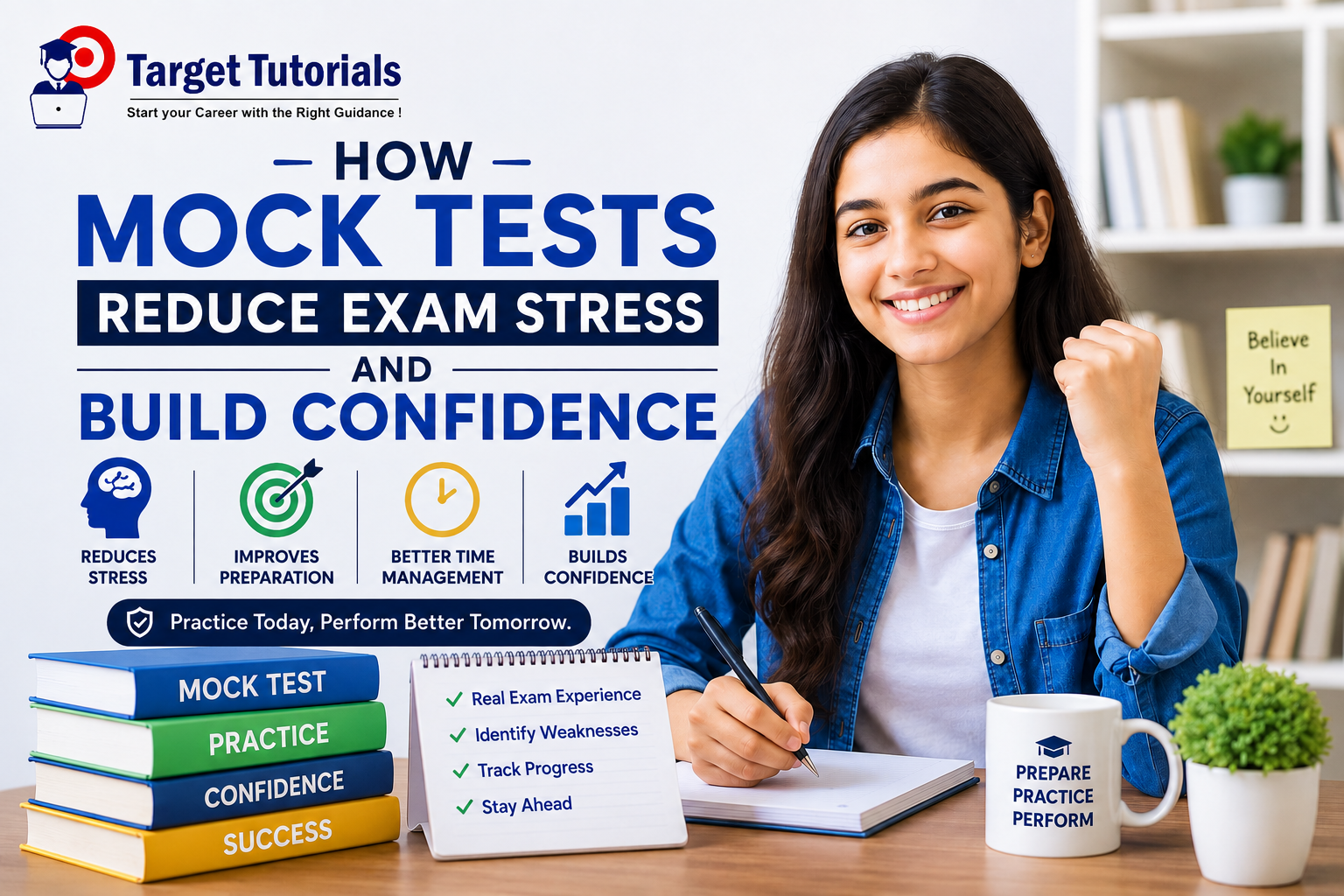
Examinations are an important part of every student’s academic journey. However, for many CBSE students, exams are also a major source of stress. Sleepless nights, fear of forgetting answers, worry about low marks, and anxiety about completing the paper on time are common experiences before board examinations. While some amount of nervousness is natural, excessive exam stress can affect concentration, memory, and overall performance. Mock tests reduce exam stress by giving students regular practice in a real exam-like environment, helping them become familiar with the question format, manage their time better, and feel more confident about their preparation. How Mock Tests Reduce Exam Stress and Build Confidence
One of the most effective ways to overcome this fear is through regular mock tests. Mock tests are practice examinations conducted under conditions similar to the actual exam. They help students become familiar with the exam pattern, improve preparation, and develop confidence gradually. Instead of facing the board exam as an unknown challenge, students enter the examination hall with prior experience.
This blog explains in detail how mock tests reduce exam stress and build confidence among CBSE students.
Why Do Students Feel Exam Stress?
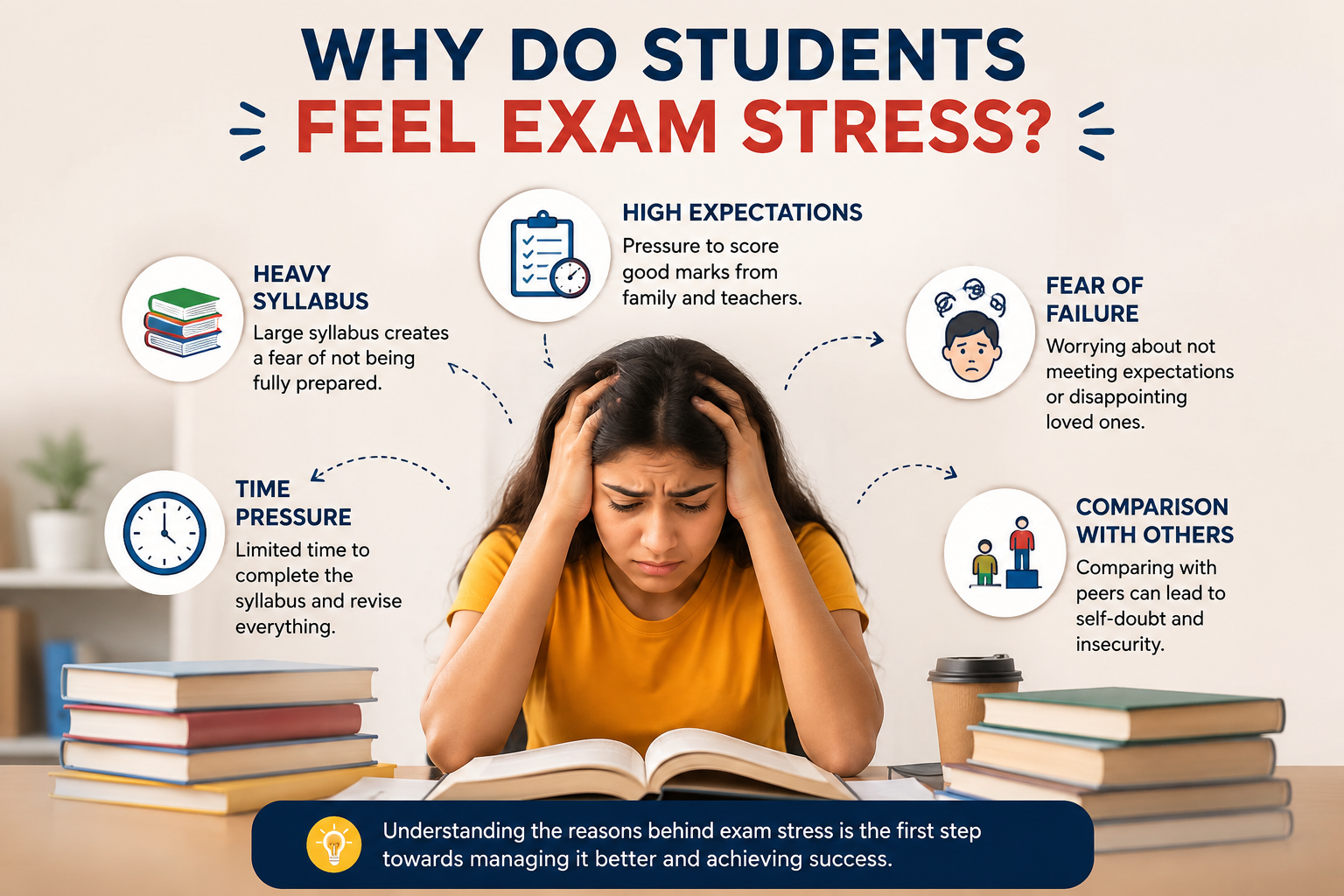
Before understanding the role of mock tests, it is important to know the common causes of exam anxiety:
- Fear of failure
- Uncertainty about the question paper
- Lack of revision
- Poor time management
- Fear of forgetting answers
- Pressure from parents, teachers, or peers
- Limited practice under exam conditions
- Negative self-talk such as “I am not prepared”
In most cases, stress is not caused by the exam itself but by the feeling of being unprepared.
What Are Mock Tests?
Mock tests are practice papers designed according to the latest CBSE syllabus and exam pattern. They usually include:
- Objective questions
- Short-answer questions
- Long-answer questions
- Case-study questions
- Competency-based questions
- Time-bound full-length papers
The goal is to simulate the real examination environment as closely as possible.
Familiarity Reduces Fear
Psychologists often say that fear decreases when a person becomes familiar with a situation. The same principle applies to exams.
A student who has never attempted a full-length board paper may feel overwhelmed on exam day. In contrast, a student who has already completed several mock tests knows:
- How the paper looks
- How questions are distributed
- How much writing is required
- How to manage the time limit
Familiarity transforms the exam from an unknown threat into a familiar task.
Mock Tests Create a Real Exam Experience
When students sit for a mock test with a fixed time limit and no interruptions, they experience conditions similar to the actual examination. This practice helps them mentally prepare for:
- Sitting continuously for several hours
- Maintaining concentration
- Handling difficult questions calmly
- Managing physical and mental fatigue
- Completing the paper within time
Repeated exposure reduces nervousness during the final exam.
Builds Confidence Through Repeated Success
Confidence is not created by positive thinking alone; it is built through successful experiences. Each completed mock test gives students evidence that they can handle an exam.
For example:
- First mock test: 58%
- Second mock test: 66%
- Third mock test: 74%
- Fourth mock test: 81%
Visible improvement increases self-belief. Students begin to think, “I am improving, and I can score well.”
Reduces Fear of Time Pressure
Many students panic because they think they will not finish the paper on time. Mock tests directly address this problem.
After several timed papers, students learn:
- How long each section takes
- Which questions should be attempted first
- How to avoid spending too much time on one question
- How much time to reserve for revision
As time management improves, anxiety decreases significantly.
Identifies Weak Areas Before the Actual Exam
Uncertainty about weak topics is a major source of stress. Mock tests reveal exactly which chapters need more revision.
Suppose a student consistently loses marks in:
- Trigonometry
- Chemical equations
- Grammar
- Map work
The student can focus on these areas before the board exam. Knowing what to improve is far less stressful than wondering whether preparation is sufficient.
Improves Memory Recall Under Pressure
Many students complain, “I knew the answer at home but forgot it in the exam.” This often happens because they have not practiced recalling information under timed conditions.
Mock tests train the brain to retrieve information while working under pressure. As recall becomes stronger, students feel more secure about their preparation.
Replaces Negative Thoughts With Real Evidence
Before exams, students often think:
- “I will forget everything.”
- “The paper will be too difficult.”
- “I cannot score well.”
Mock-test results provide factual evidence against these fears. A student who has already scored well in practice tests has a concrete reason to believe in their abilities.
Teaches Students to Handle Difficult Questions Calmly
In every exam, some questions appear difficult. Students without mock-test experience may panic immediately, which affects the rest of the paper.
Mock tests teach students an important strategy:
- Skip the difficult question temporarily
- Solve easier questions first
- Return later with a calmer mind
This ability to stay composed is a major confidence booster.
Encourages Systematic Revision
Mock tests naturally create a revision schedule. Students revise chapters before each test and review mistakes afterward. This continuous revision prevents last-minute cramming, which is one of the biggest causes of exam stress.
Regular revision leads to:
- Better retention
- Stronger understanding
- Reduced fear of forgetting
- Greater confidence before exams
Makes the Final Exam Feel Easier
Students often report that the actual board exam feels easier than their mock tests. This happens because they have already practiced under similar or even slightly tougher conditions.
When the final exam feels familiar, students enter the hall with a calmer mindset and perform closer to their true potential.
Improves Concentration and Mental Stamina
Board examinations require sustained concentration for two to three hours. Students who rarely practice long papers may lose focus during the actual exam.
Regular mock tests gradually increase:
- Attention span
- Mental stamina
- Writing endurance
- Focus under pressure
Improved stamina reduces exhaustion and stress during the final examination.
Encourages Healthy Exam Habits
Mock tests help students develop positive exam habits such as:
- Reading instructions carefully
- Underlining key points
- Planning answers before writing
- Keeping handwriting neat
- Reviewing answers at the end
- Avoiding careless mistakes
These habits create a sense of control, and feeling in control reduces anxiety.
Provides Emotional Preparation
Mock tests do more than test academic knowledge; they also prepare students emotionally. Students experience:
- Nervousness before the test
- Pressure during the test
- Relief after completion
- Reflection during analysis
After repeating this cycle several times, emotional reactions become less intense, and students learn to manage their feelings better.
Helps Parents and Teachers Support Students Better
Mock-test performance gives parents and teachers a realistic picture of a student’s preparation. Instead of giving general advice such as “study harder,” they can offer specific support for weak topics.
Constructive support reduces pressure and increases student confidence.
Best Practices for Stress-Free Mock Testing
To get maximum benefit, students should:
- Attempt tests honestly without books.
- Follow the exact time limit.
- Sit in a quiet environment.
- Avoid checking answers during the test.
- Analyze mistakes calmly afterward.
- Focus on improvement rather than perfection.
- Maintain an error notebook for revision.
Mock tests should be treated as learning opportunities, not as final judgments.
Common Mistakes That Increase Stress
Students should avoid:
- Comparing scores excessively with others
- Taking too many tests without revision
- Ignoring mistakes after checking
- Feeling discouraged by one poor score
- Studying only before the test and not afterward
A low mock-test score is useful if it leads to improvement before the actual exam.
A Simple Confidence-Building Routine
Week 1
- One chapter test
Week 2
- One subject test
Week 3
- One half-syllabus test
Week 4
- One full-length mock test
Repeat the cycle monthly. Gradual exposure is more effective than attempting many papers suddenly before the board exam.
Realistic Impact of Mock Tests
Students who practice regularly often experience:
- Lower exam anxiety
- Better sleep before exams
- Improved concentration
- Higher confidence
- Faster paper completion
- Fewer careless mistakes
- Better overall scores
The goal is not to eliminate all nervousness but to keep it at a healthy level where it motivates rather than harms performance.
Conclusion
Mock tests are one of the most powerful tools for reducing exam stress and building confidence in CBSE students. They replace uncertainty with familiarity, transform fear into preparation, and help students develop the skills needed to perform well under exam conditions.
By practicing regularly, analyzing mistakes, and improving step by step, students learn that exams are manageable challenges rather than frightening obstacles. Confidence grows with every completed paper, every corrected mistake, and every visible improvement.
For students preparing for school exams or CBSE board examinations, regular mock tests should be an essential part of the study plan. The more students practice in a realistic exam environment, the calmer, more confident, and more successful they are likely to be on the actual exam day.
FAQs:
How Mock Tests Reduce Exam Stress and Build Confidence
1. How do mock tests help reduce exam stress?
Mock tests give students regular practice in an exam-like environment. This makes the actual exam feel more familiar and reduces fear and nervousness.
2. Can mock tests improve students’ confidence?
Yes. Completing mock tests regularly helps students understand their strengths and track their progress, which naturally builds confidence.
3. How do mock tests improve time management?
Mock tests allow students to practice completing questions within a fixed time. With regular practice, they learn how to divide their time effectively among different sections.
4. Do mock tests help students identify their weaknesses?
Yes. Reviewing mock test results helps students find topics where they make mistakes. They can then focus their revision on those areas before the final exam.
5. How often should students take mock tests before exams?
Students should take mock tests regularly during their preparation. Increasing the frequency closer to the exam can provide more practice and help them feel better prepared.